
Bhavya Expo
The soul of every saree
Handloom weaving families of Kanchipuram — the people the cloth actually comes from.
Kanchipuram Silk Artisans
A saree begins as a household, not a factory
Walk through Pillaiyarpalayam before sunrise and you hear the looms before you see any of them — a low, uneven knocking coming from front rooms and courtyards. Inside, a grandmother is checking tension with her thumb, a father is setting the border shuttles, a boy of nineteen is learning the pallu the same way his father did, by getting it wrong for two years.
This is the whole industry. Kanchipuram silk sarees are made by families, in the houses they live in, using skill that was never written down. When we say authentic Indian craftsmanship, this is the thing we mean — and it is the reason we buy directly from the loom.
Handloom Weaving Families
Craft that runs in the family
Kanchipuram silk is not woven in mills. It comes from household looms in neighbourhoods like Pillaiyarpalayam, Sevilimedu and Thirupputkuzhi — families who have woven for generations and know the craft by hand, not by manual.
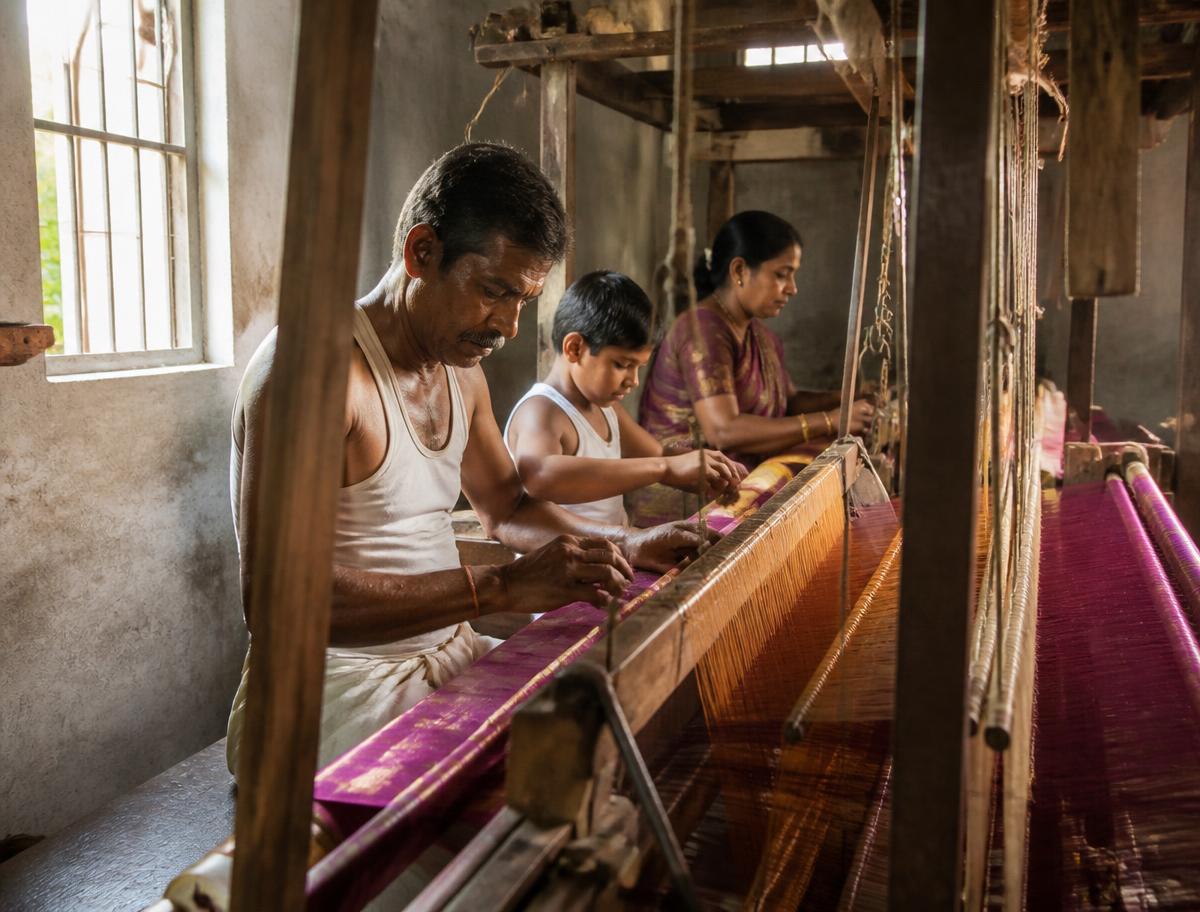
Traditional temple-border sarees
A family workshop in Pillaiyarpalayam
Three generations at the same pit loom. The grandfather still sets the warp; his son weaves the body; the grandson handles the border shuttles. Their temple-border korvai joins are among the cleanest in the town.
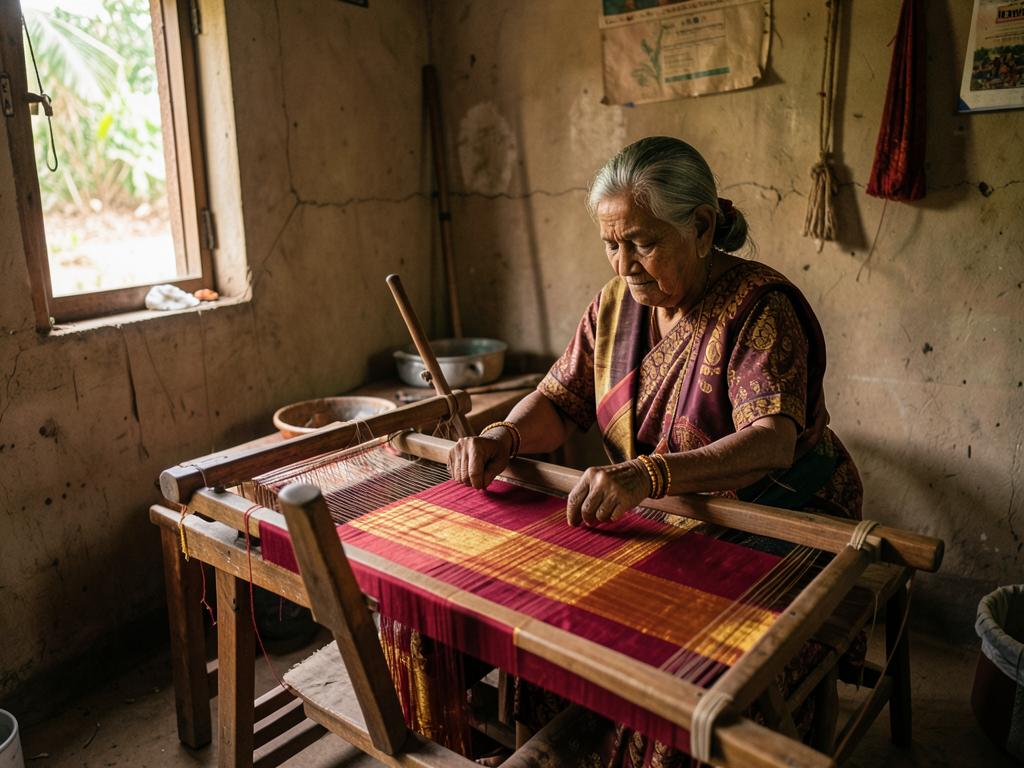
Classic bridal weaves
The senior weaver of Sevilimedu
Over five decades at the loom. She still weaves the first few inches of every bridal order herself, checking the sett and tension before the rest of the family takes over.
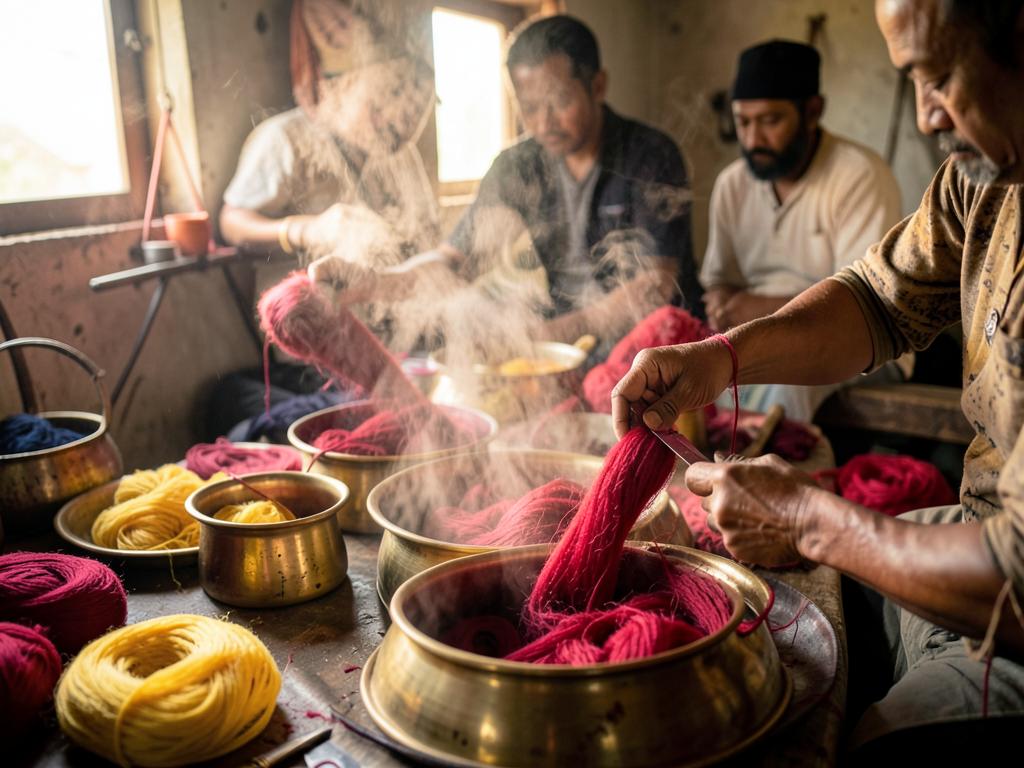
Shade-matched silk dyeing
A dyeing unit near the temple tanks
Mulberry yarn is degummed, dyed to the buyer's shade card in brass vessels, and dried in the open yard. A dye lot is only released when it matches the approved swatch under daylight.
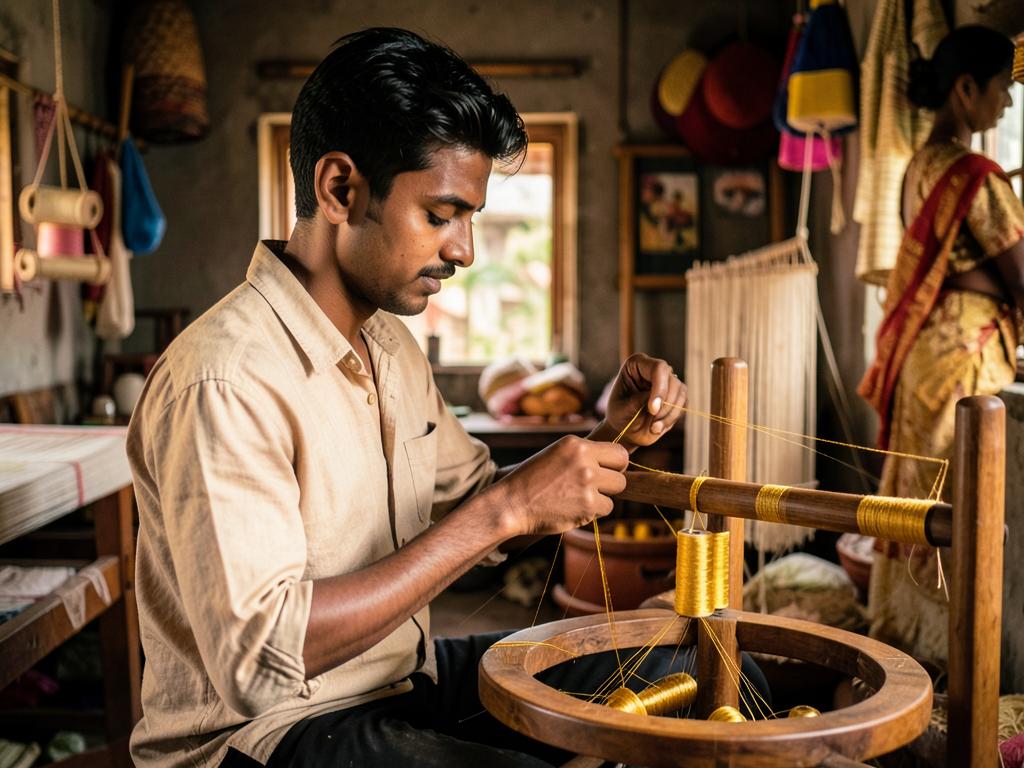
Zari preparation & winding
A zari winder of the next generation
Before a single pick is thrown, zari is tested, wound on bobbins and tensioned by hand. The younger weavers keep this quiet, precise craft alive alongside the louder work of the loom.
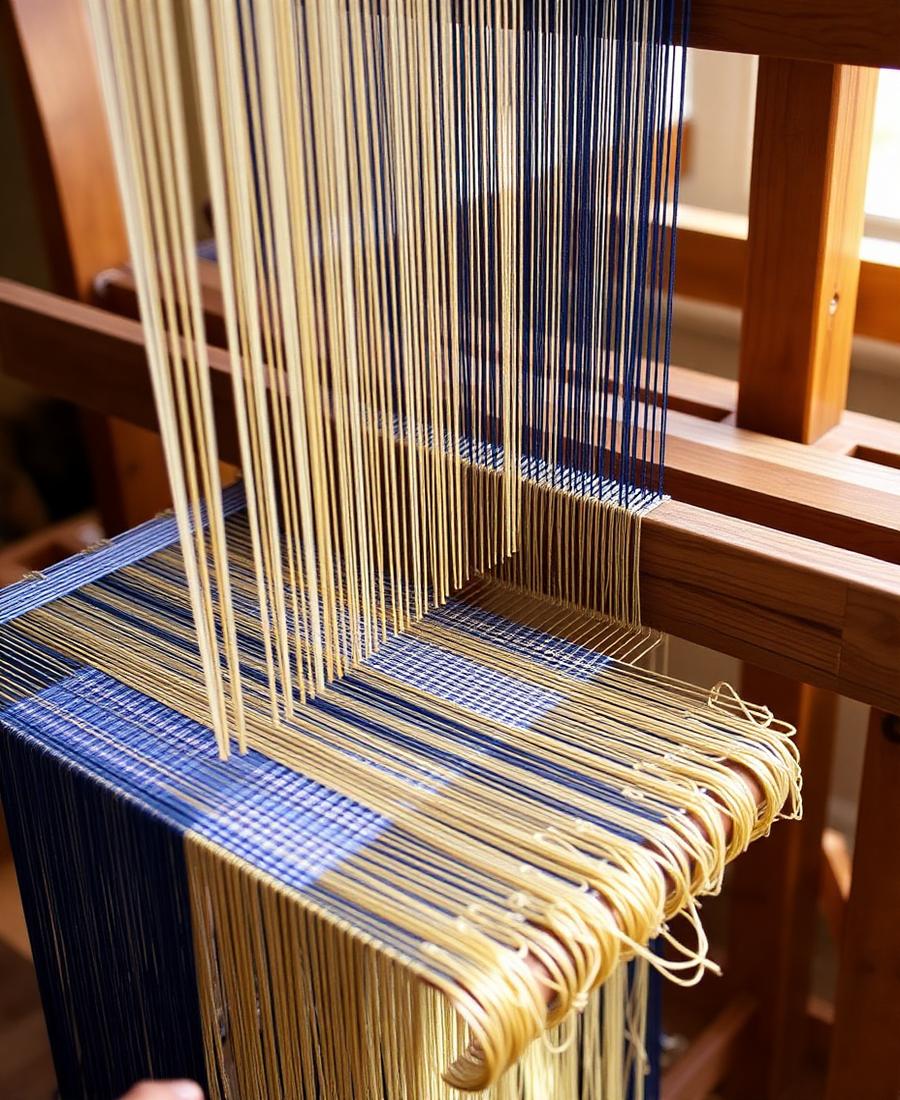
Warp preparation
A warping and dyeing unit
Threads are measured, counted and mounted — the foundation of the saree's drape. An error here cannot be corrected later, so warping is the most deliberate stage of all.
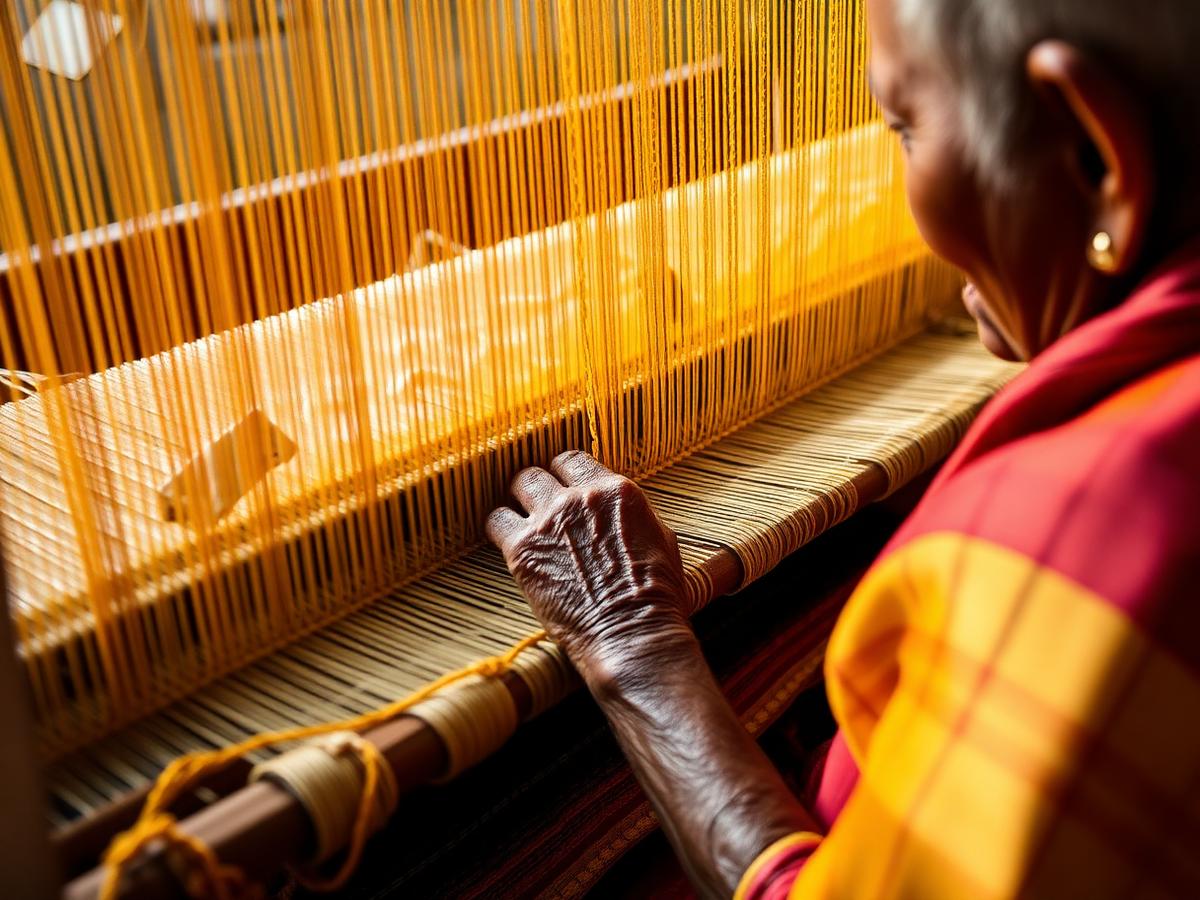
Zari setting & tension checks
Hands that know the zari
Decades of muscle memory: setting the zari and checking tension before every pick of the shuttle. One loose pick shows in the cloth for its whole life.
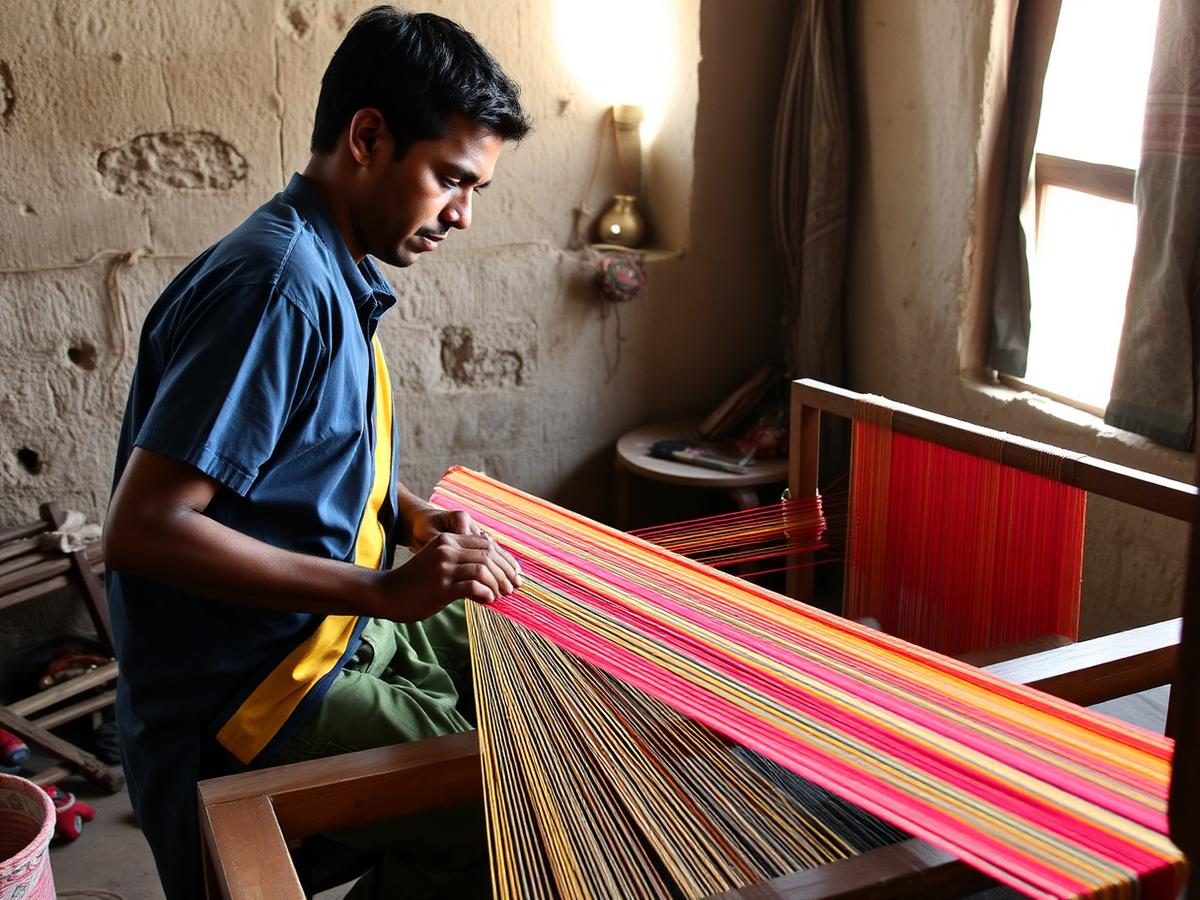
Apprenticeship in pallu work
Generations at the loom
A son learning warping and pallu work alongside his father, in the same room the family has woven in for years. Apprentices begin on plain borders and graduate to bridal pallus over several years.
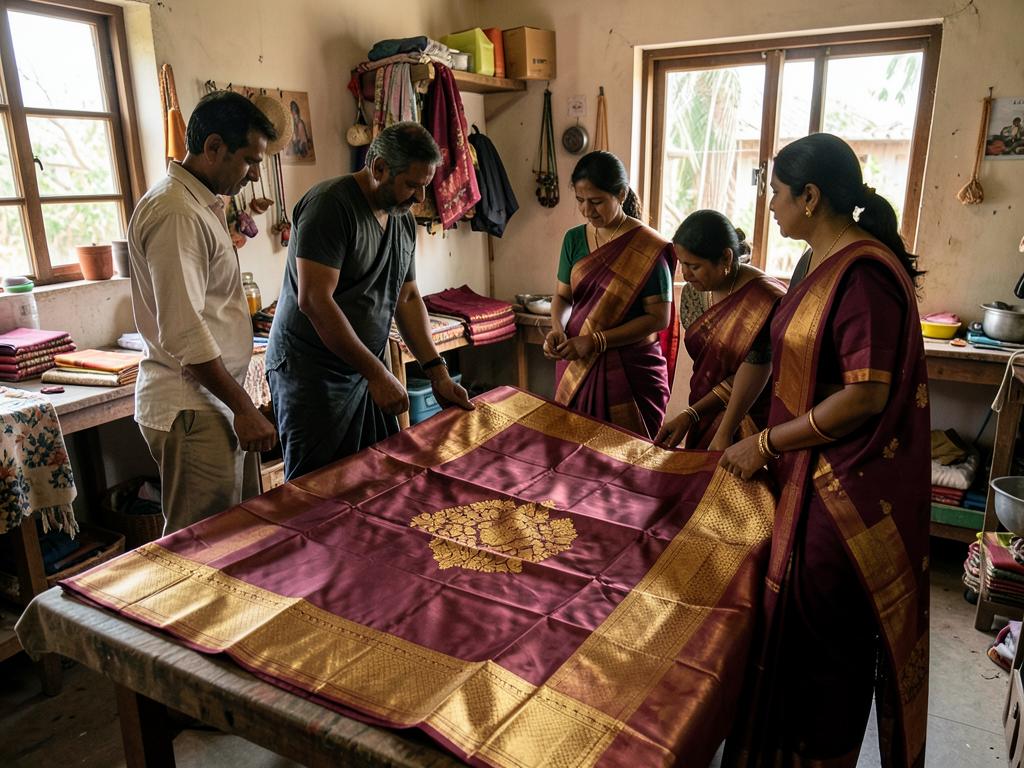
Final quality check
The family inspection table
Every saree is opened, spread and read by the whole family before it leaves the workshop — zari lines, border joins and pallu alignment checked against the approved sample.
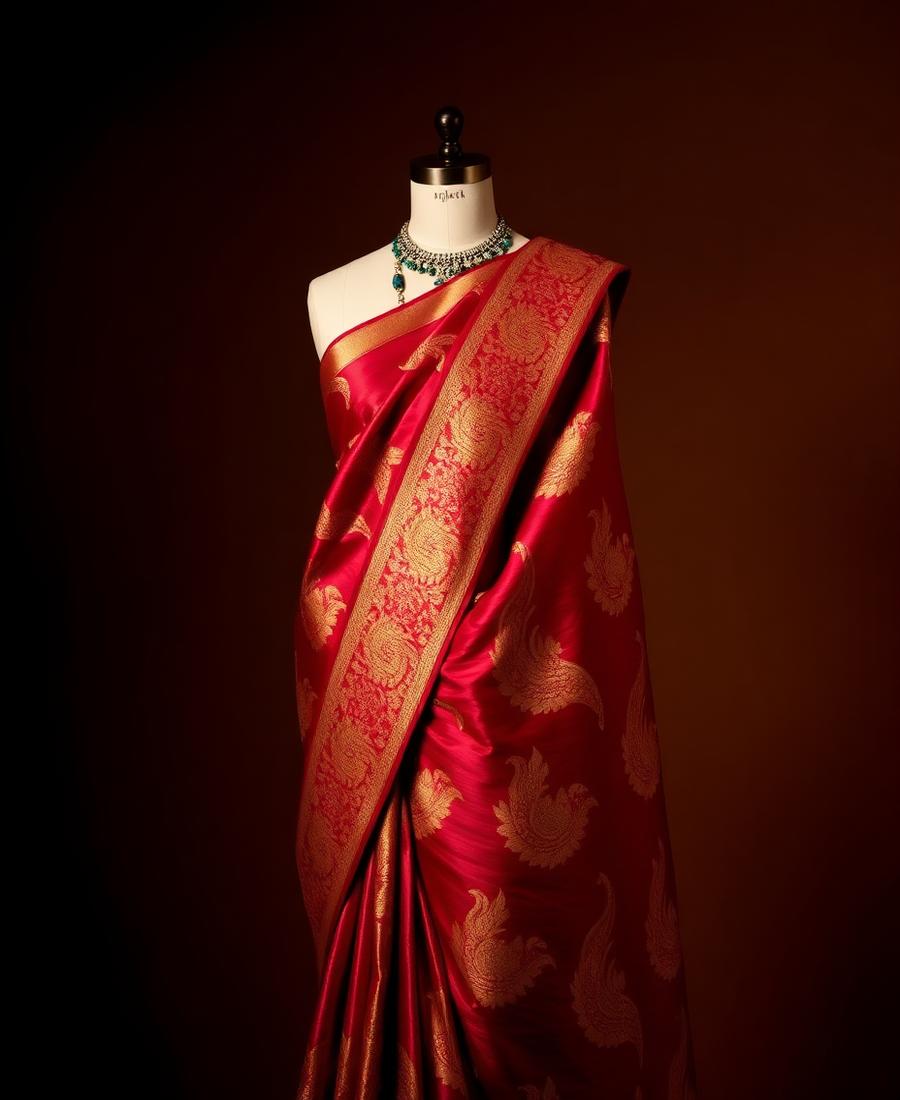
Heavy zari brocade
A bridal weave atelier
Heavy zari brocade work can take several weeks per loom length, with three weavers sometimes sharing one loom across shifts.
Loom to Loom
How a saree is made
A single Kanchipuram saree passes through at least six stages and many hands before it is folded for export.
- 1
Yarn & Dyeing
Mulberry silk is degummed, dyed to the buyer's shade card and dried.
- 2
Warping
Threads are measured and mounted — the foundation of the saree's drape.
- 3
Zari Preparation
Zari is checked for purity and wound before weaving begins.
- 4
Weaving
The three-shuttle technique interlocks body, border and pallu by hand.
- 5
Finishing
Trimming, pressing and inspection against the approved sample.
- 6
Packing
Folded with acid-free tissue and sealed for export.
A Day at the Loom
Rhythm of the workshop
Weaving follows the daylight. A plain saree takes about a week; a heavy bridal weave can take three to four.
- 5:30
The loom is opened, the warp brushed and the first tension check made by hand.
- 7:00
Weaving begins in earnest — body shuttles first, borders joined at the korvai.
- 11:00
A break, then zari work: motifs on the border and pallu, the slowest and most skilled part.
- 16:00
The day's weaving is measured, logged and checked against the design card.
- 18:00
Finished lengths go to the family table for inspection; tomorrow's warp is planned.
Authenticity
Proof that the hands were real
Heritage claims are easy to make. These are the markers a buyer can check.
GI tag
Kanchipuram silk is protected under India's Geographical Indications Act, 1999. The name belongs to these looms and this region — not to a label.
Silk Mark
Silk Mark, issued by the Silk Mark Organisation of India under the Central Silk Board, certifies pure natural silk. Provided on request with any order.
Handloom, not power loom
The korvai border join and the petni pallu join are made by hand at the loom. Neither can be reproduced at power-loom speed.
Named workshops
Every order is traced to the family that wove it, so quality questions go back to the loom, not into a supply chain.
Our Commitment
Fair wages, steady work
Bhavya Expo procures directly from weaver cooperatives in Pillaiyarpalayam, Kanchipuram. Buying at the loom supports artisan livelihoods on fair, timely wages and removes the intermediate trade markups that sit between a weaving family and an international buyer.
Continuity matters as much as price: supporting apprenticeships and keeping the three-shuttle technique in daily practice is how Kanchipuram silk survives the next generation.
Direct procurement
We procure directly from weaver cooperatives in Pillaiyarpalayam, Kanchipuram — rates are agreed with the family, not a broker.
No intermediate markups
Direct sourcing supports artisan livelihoods while eliminating intermediate trade markups for international buyers.
On-time payment
Agreed rates on agreed dates, with advances for long bridal weaves.
Steady work
Bulk orders are planned across the year so looms stay busy instead of working in bursts.
Apprenticeships
We support families bringing the next generation to the loom, keeping the three-shuttle technique in daily practice.