Pure Kanchipuram Silks. Woven in Tradition. Delivered Worldwide.

Bhavya Expo

Why Kanchipuram silk endures

Temple heritage, handloom craftsmanship and the marks that prove both.

The Silk City

A saree that carries a city's memory

Kanchipuram silk sarees are not simply beautiful cloth. They are the wedding cloth of southern India, woven within sight of temples that are more than a thousand years old, by families who learned the craft the way they learned to speak.

A city of temples, a city of looms

Kanchipuram is one of the oldest living cities of southern India, known for centuries as a seat of learning and of temple building. The gopurams of the Kailasanathar and Ekambareswarar temples stand over the same lanes where handlooms still work at dawn. The saree and the temple grew up together: the motifs woven into the border — the rudraksha bead, the temple spire, the mango, the peacock, the yali — are read straight off stone carving and carried into silk.

Cloth as offering

In Tamil households a Kanchipuram silk saree is rarely bought casually. It is the cloth of a wedding, of a first Deepavali, of a daughter leaving home, of an offering draped on a deity. It is folded away, remembered by its colour, and given onward to a daughter or a granddaughter. A saree that is expected to be worn by two generations has to be built like one — which is exactly what the weave does.

A protected name

Because that reputation is worth something, the name itself is protected. Kanchipuram silk was among the earliest Indian handloom products registered under the Geographical Indications of Goods (Registration and Protection) Act, 1999, administered by the Geographical Indications Registry, Chennai. Only sarees genuinely woven in the notified Kanchipuram region may be sold under the name.

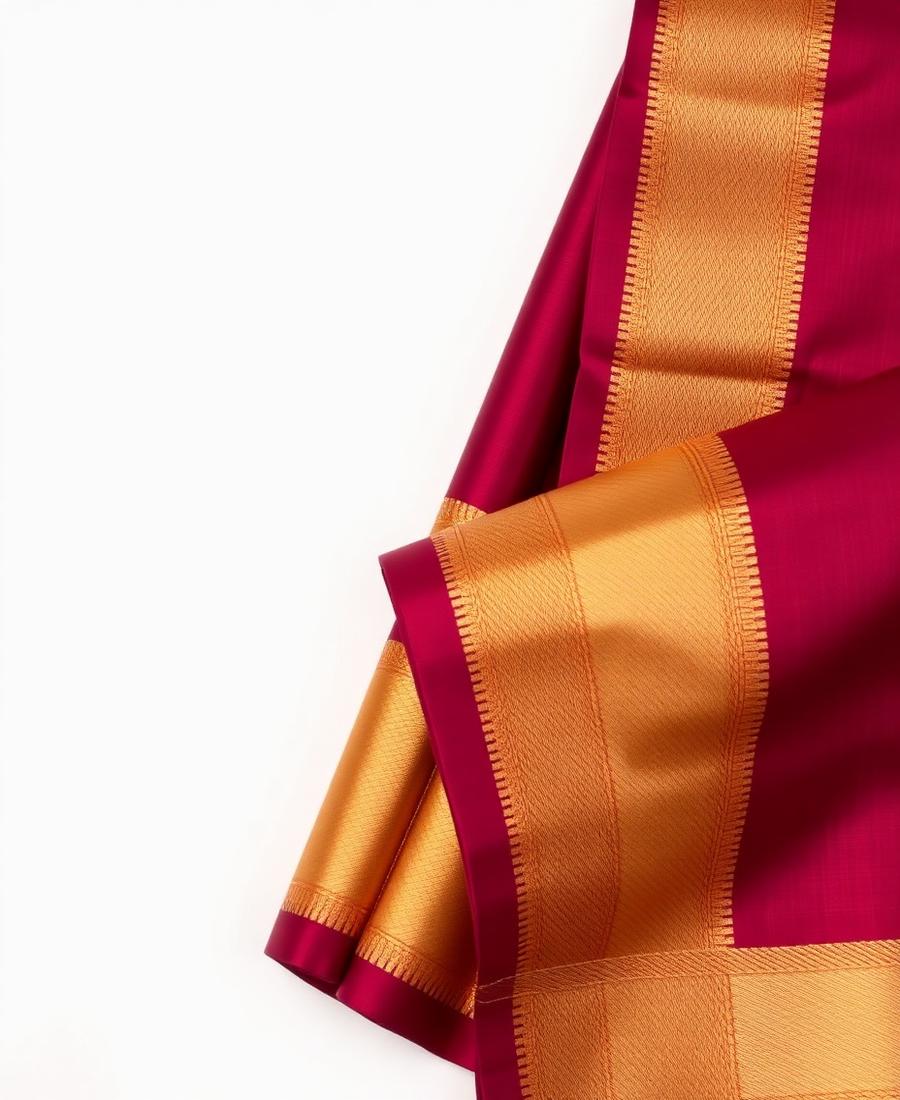
Detail of a Kanchipuram silk saree zari border

Handloom Craftsmanship

The engineering of Kanchipuram silk: korvai & 3-ply yarn

What sets a true Kanchipuram silk saree apart from other Indian silk weaves is its structural engineering and heavy drape density.

The Korvai (interlocking) technique

Korvai is a painstaking hand-weaving technique where the body and border of the saree are woven separately using independent shuttles. Two weavers work simultaneously on a single loom, joining border and body with a manual interlocking warp system (petni). The temple-inspired zig-zag joint (mukkani) ensures the border never splits from the body over decades of wear.

3-ply twisted mulberry silk

Unlike lighter silks that use single or double-ply thread, Kanchipuram sarees are woven using 3-ply (filature) mulberry silk yarn in warp and weft. Three individual raw silk threads are twisted together to create a high-density, heavy-grammage fabric — typically 650 g to 950 g per saree — known for its rich lustre, structural stiffness and heirloom longevity.

Electroplated pure zari

Authentic zari borders are crafted by wrapping fine silver threads around a pure silk core, followed by 24k gold electroplating, creating contrast borders that retain their sheen for generations. Tested, half-fine and pure zari grades differ in silver content and price, and we state the grade on every quotation.

Documented specification

Zari grade, silk weight, width and dye lot are recorded per order, so a buyer knows exactly what is on the loom before production begins. HS Code 5007.20.10 applies to the finished handloom silk saree.

Authenticity

Geographical Indication (GI Tag No. 28)

Kanchipuram silk is protected by law under the Geographical Indications of Goods (Registration and Protection) Act, 1999 by the Government of India.

Official recognition

Granted GI Tag No. 28, certifying that authentic Kanchipuram silk sarees can only be produced within the defined geographic boundaries of the Kanchipuram weaving cluster in Tamil Nadu.

Purity mandate

To qualify for GI certification, the saree must feature 100% pure mulberry silk in both warp and weft, combined with authentic tested or pure gold/silver zari.

Quality assurance

Every Bhavya Expo export consignment includes official GI Tag verification documentation, guaranteeing your international shipments meet strict legal origin and quality benchmarks.

Authenticity Markers

How authenticity is proved, not claimed

Four things a serious buyer of authentic Indian textiles should be able to ask for by name.

GI Tag No. 28

Registered under India's Geographical Indications of Goods (Registration and Protection) Act, 1999. The name belongs to the region, not to a brand.

Silk Mark

Silk Mark, issued by the Silk Mark Organisation of India under the Central Silk Board, certifies the fabric as pure natural silk. Available on request for every consignment.

Handloom origin

Woven on household pit and frame looms in Kanchipuram, not on power looms — the korvai and petni joins cannot be faked at speed.

Documented zari

Zari grade, silk weight and dye lot are recorded per order, so a buyer knows the specification before the loom is set.

The Silks

Colour, zari and weave

A closer look at the cloth: temple borders, contrast pallus and the zari work that defines a Kanchipuram silk saree.

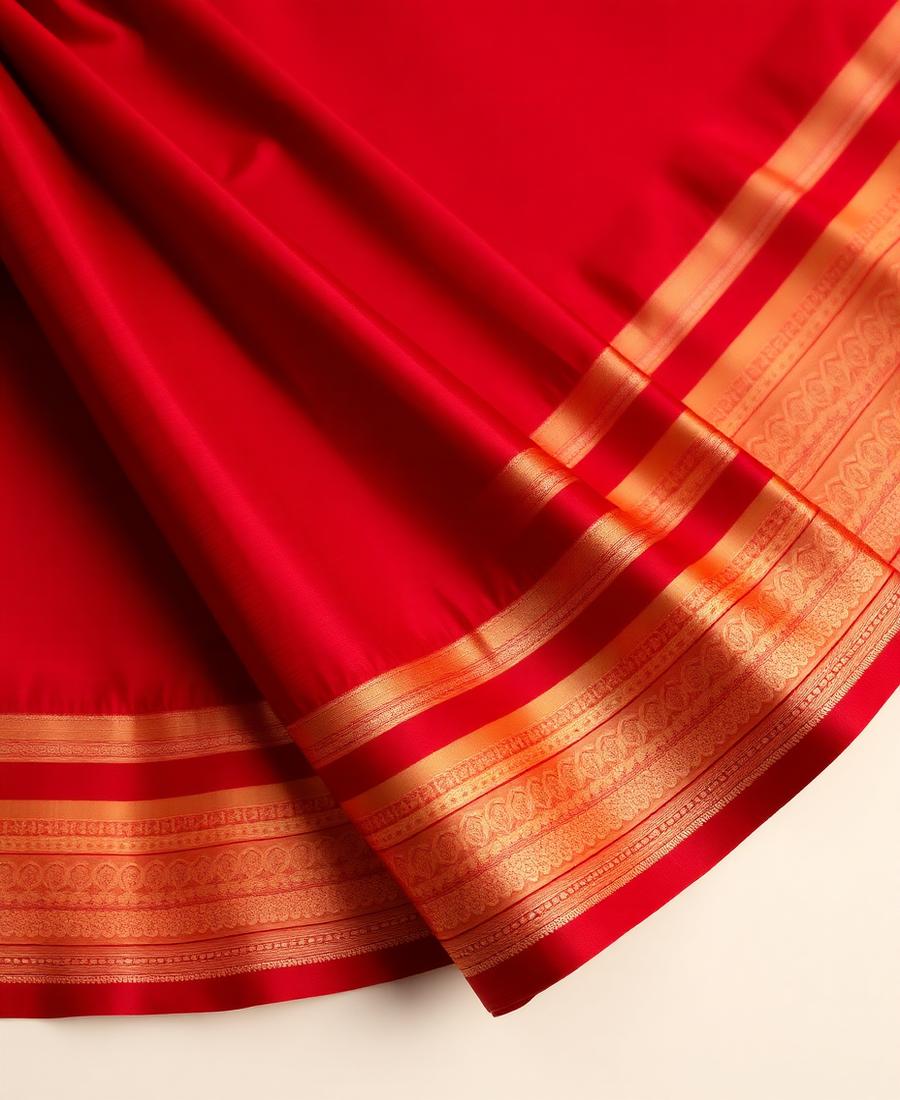
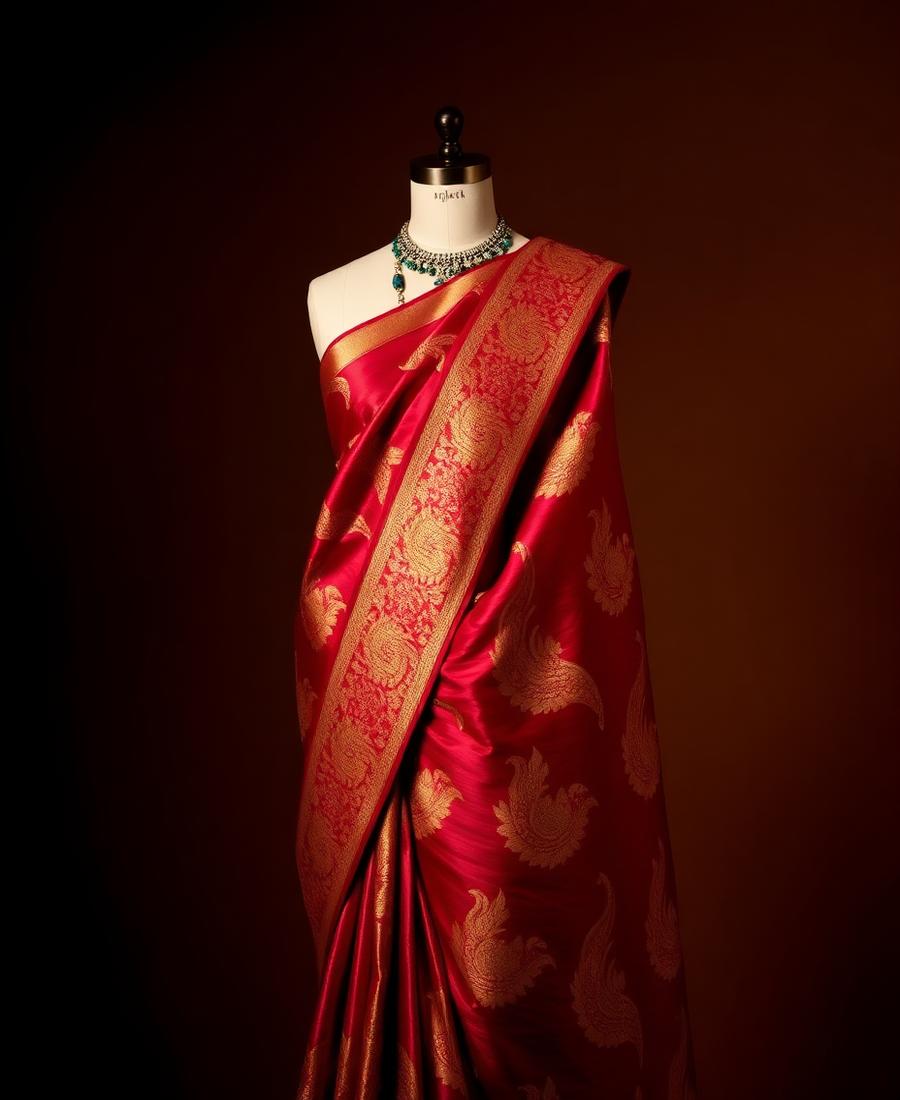
Red Kanchipuram silk saree with a wide gold zari temple border
Classic red with a korvai temple border
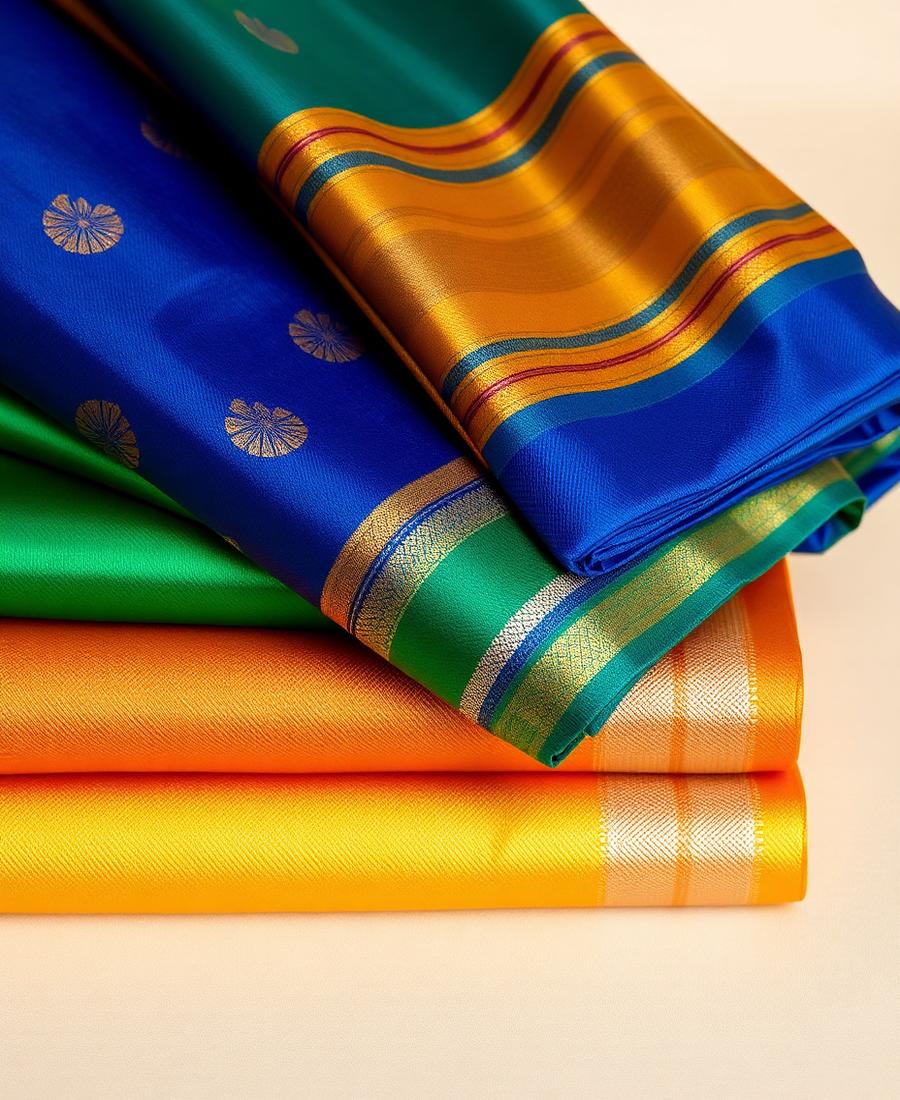
Stacked Kanchipuram silk sarees in blue, green and mustard
Traditional contrast palettes, stacked from the loom
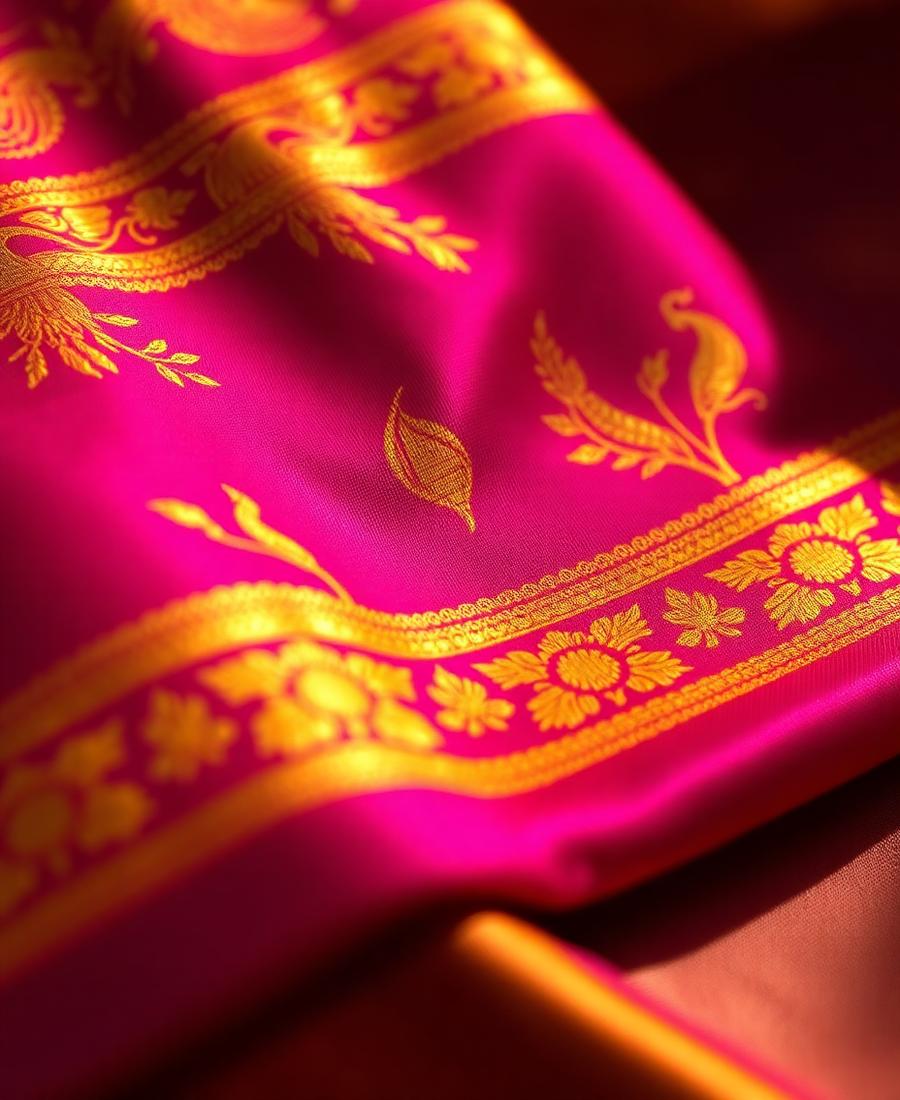
Close-up of gold zari peacock and mango motifs on magenta silk
Zari motifs drawn from temple carving
Bridal Kanchipuram silk saree with heavy zari pallu
A bridal pallu, several weeks at the loom
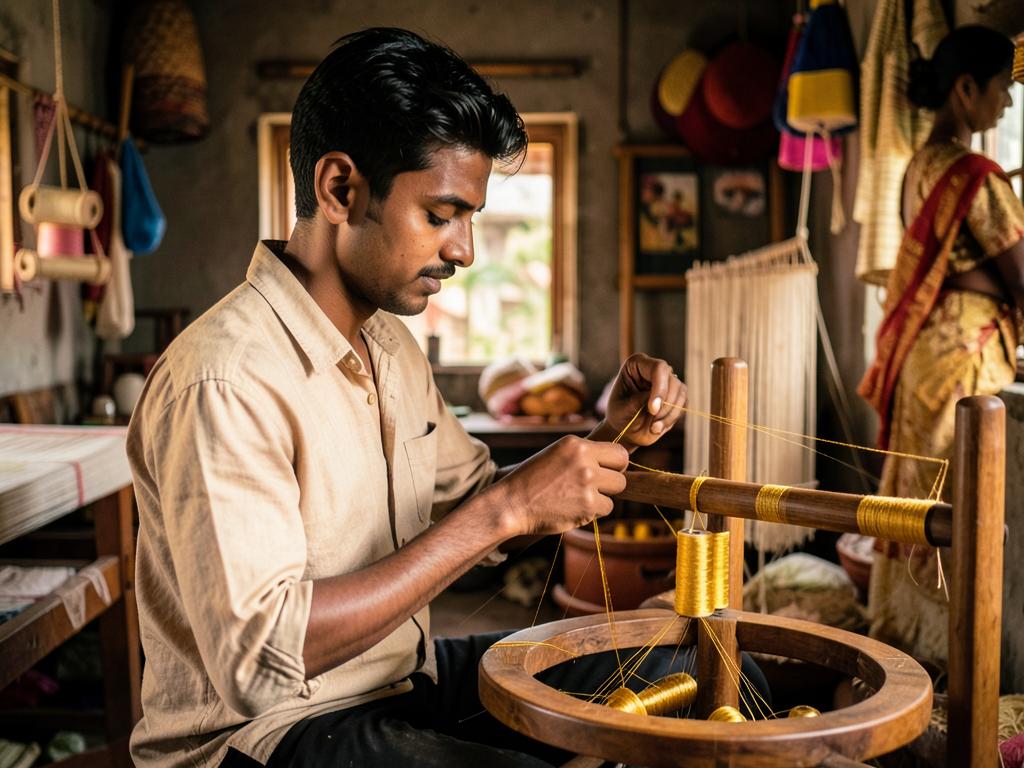
Zari being wound onto bobbins before weaving
Zari tested and wound before the first pick
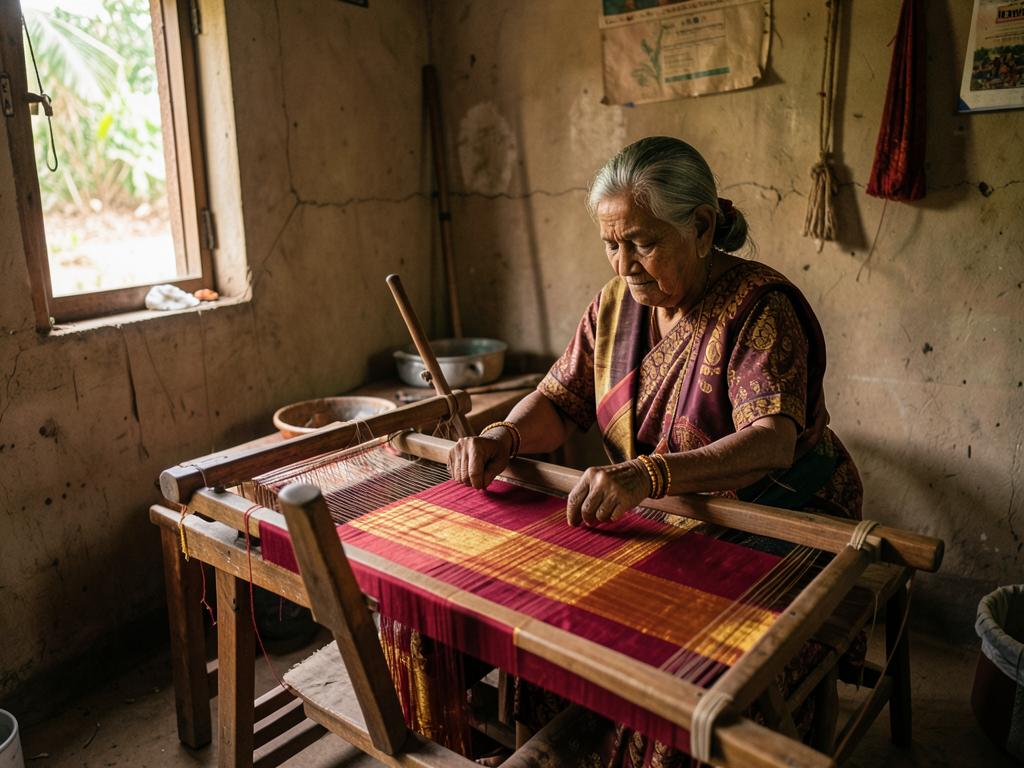
A senior woman weaver at a pit loom in Kanchipuram
Fifty years of tension read by hand

Buyer's Guide

How to identify a genuine Kanchipuram saree

  • Check the body-to-border join — a genuine korvai shows a fine interlocked line, never a stitched seam.
  • Scratch-test the zari: real zari reveals reddish or orange silk thread beneath the metal, not white.
  • Feel the weight — pure mulberry Kanchipuram silk is noticeably heavier than blended silk of the same size.
  • Look for the Silk Mark label and, for exports, the GI declaration supplied with the consignment documents.
  • Turn the saree over: on a handloom piece the reverse is disciplined but never machine-identical to the face.

Heritage and Trade

Heritage cloth, export-ready

What makes a Kanchipuram saree meaningful at a wedding is also what makes it a sound product to import: consistent silk weight, a documented zari grade, colourfast dyeing to an approved shade card, and a weave that survives shipping, merchandising and years of wear. We supply wholesale export buyers with documented specifications, approved samples and production planned to their market requirements.

Get in Touch

Let's weave your next collection together

Share your requirement — weave, volume and destination — and our export desk responds within one business day.